



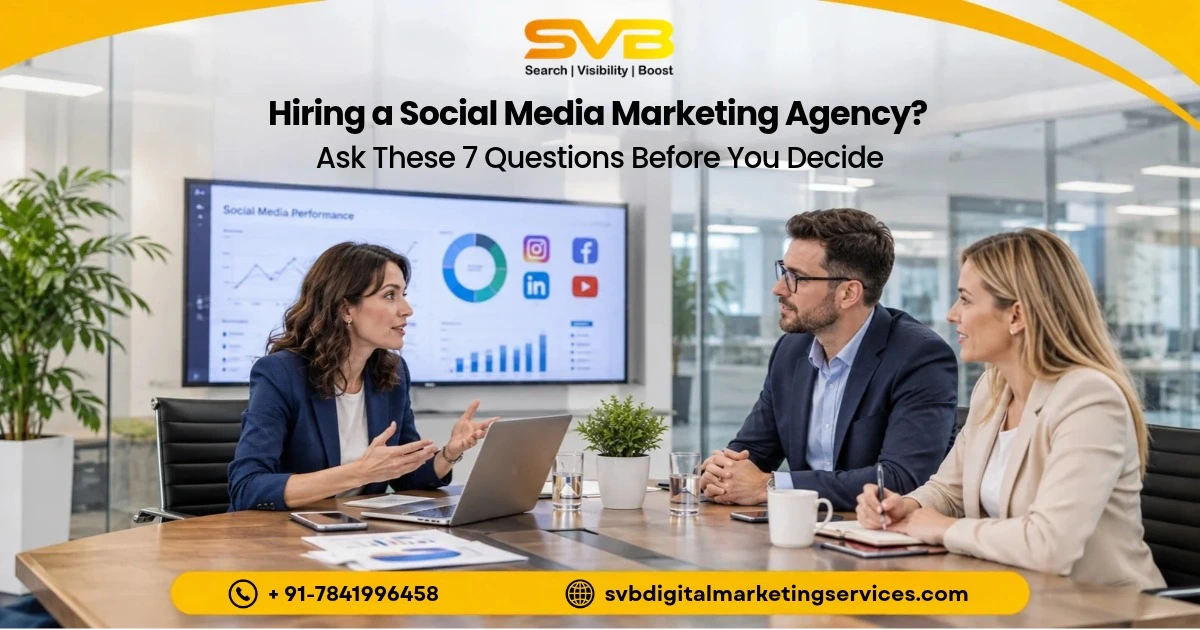
Your business is active on social media, but are your marketing activities reaching the right audience and supporting your business goals?
Regular posts and growing follower numbers can improve visibility, but they do not automatically generate enquiries or sales. Businesses need a clear strategy, relevant content and consistent performance monitoring to make social media marketing more effective.
Hiring a Social Media Marketing Agency can help bring these activities together. However, agencies differ in their services, strategies and pricing. Before choosing a partner, ask these seven questions to understand what you will receive and whether the agency is right for your business.
1. Do You Understand My Business and Target Audience?
An agency should understand what your business offers, who your customers are and what you want to achieve before recommending a campaign.
For example, a manufacturing company may want to connect with distributors and B2B buyers, while a restaurant may focus on attracting local customers. Both businesses need different content and marketing approaches.
Ask the agency how it will research your:
- Products or services and their value.
- Target customers and their interests.
- Industry and competitors.
- Business goals and marketing challenges.
- Customers’ online behaviour.
A good agency should develop its recommendations around your actual business requirements rather than copying competitors or using the same strategy for every client.
2. What Social Media Marketing Strategy Will You Follow?
Regular posting keeps an account active, but activity alone is not a marketing strategy. Ask how the agency plans to connect its activities with your business objectives.
A social media marketing strategy may include:
- Audience and competitor research.
- Selection of suitable social media platforms.
- Monthly content planning and scheduling.
- Organic social media management.
- Paid social media campaigns.
- Community engagement and lead generation.
- Performance tracking and improvements.
For example, a B2B company may use LinkedIn to share industry knowledge and connect with decision-makers. An e-commerce business may need product demonstrations, customer reviews and advertising campaigns.
The agency should explain why it recommends particular activities and how they support your goals. Focus on the strategy behind the work, not simply the number of posts promised each month.
3. How Will You Measure Performance and Business Leads?
Likes, comments and followers can indicate audience activity, but they do not tell the whole story. Ask which metrics the agency will track and how it will evaluate campaign performance.
Important social media marketing metrics include:
- Reach and impressions: How many people see your content and how often it appears.
- Engagement: How audiences interact with your posts and videos.
- Profile visits and website traffic: Whether social media encourages people to learn more about your business.
- Qualified leads: Whether potential customers contacting you match your target audience.
- Conversions: Whether visitors complete actions such as submitting an enquiry or making a purchase.
- Cost per lead: The advertising expenditure associated with generating a lead.
The right metrics depend on your campaign objectives. A brand awareness campaign may focus on reach, while a lead-generation campaign should also evaluate enquiries and conversions.
For example, a post with fewer likes may generate several relevant business enquiries, while a widely viewed post may produce no leads.
A reliable agency should explain these results and use performance data to identify opportunities for improvement. Be cautious of agencies that promise guaranteed results without understanding your business, competition and budget.
4. What Type of Content Will You Create for My Business?
Content should give your audience a reason to notice, understand and trust your business. Ask what formats the agency recommends and how each will support your marketing goals.
Depending on your industry and audience, content may include:
- Educational posts: Useful information that answers customer questions.
- Informative carousels: Tips, comparisons and step-by-step explanations.
- Short-form videos and reels: Product demonstrations, advice and behind-the-scenes content.
- Industry insights: Relevant updates and professional knowledge.
- Testimonials and case studies: Genuine customer experiences and examples of work.
- Promotional content: Information about products, services and offers.
Discuss the content calendar, brand guidelines, approval process and revision limits. The agency should maintain your brand voice and adapt content to different platforms.
AI tools can support content research and production, but human review remains important for accuracy, originality and brand relevance. The objective is not simply to publish more content; it is to publish useful content consistently.
5. Which Social Media Platforms Are Right for My Business?
Your business does not necessarily need to be active on every platform. The right channels depend on your target audience, content requirements and marketing objectives.
For example:
- LinkedIn: Suitable for B2B marketing, professional networking and industry insights.
- Instagram: Useful for visual storytelling, product presentations and reels.
- Facebook: Can support community engagement, local visibility and customer communication.
- YouTube: Suitable for tutorials, product demonstrations and educational videos.
Ask the agency why it recommends particular platforms and what role each will play in your strategy.
A focused presence on two or three relevant platforms may be more practical than spreading your resources across every available channel. Platform selection should be based on audience behaviour, not popularity alone.
6. What Services Are Included in Your Pricing?
Before signing an agreement, understand exactly what is included in the proposed social media marketing package.
Ask whether the agency provides:
- Social media strategy and content calendars.
- Graphic design and creative development.
- Caption writing and content publishing.
- Reel and video production.
- Community management.
- Paid advertising management.
- Performance reporting and analysis.
Also clarify the number of monthly posts, platforms covered, revision limits and additional charges.
Remember that advertising budgets and agency management fees may be separate. Photography, video production and other specialised requirements may also involve additional costs.
Do not select an agency based only on the lowest quotation. Compare its strategy, deliverables, communication and service quality. A transparent proposal should clearly explain what you are paying for and what you can expect.
7. How Will You Manage Communication, Reporting and Account Ownership?
A successful working relationship requires clear communication and responsibilities.
Ask who your main contact will be, how frequently reports will be shared and how content approvals or urgent customer complaints will be handled.
You should also understand how the agency reviews campaign performance and responds when results are below expectations. Reports should explain what happened, what the numbers mean and what improvements are planned.
Another important consideration is account ownership. Your business should retain appropriate administrative access to its social media profiles, advertising accounts and agreed creative assets.
Clarify these arrangements in the agreement, including what happens when the working relationship ends. Transparent communication and account access help protect your business and make collaboration easier.
Warning Signs to Watch for Before Hiring an Agency
Before making your decision, look out for these common warning signs:
- Guaranteed viral posts, followers or leads without proper evaluation.
- No clear explanation of the proposed strategy.
- Excessive focus on likes and follower counts.
- Unclear pricing and service deliverables.
- Identical content strategies for different businesses.
- No proper reporting or account ownership arrangements.
These signs do not automatically mean an agency is unsuitable, but they are reasons to ask more questions. Look for realistic expectations, transparent processes and clear explanations.
Social Media Posting vs. Strategic Social Media Marketing
Publishing posts is only one part of social media marketing. A strategic approach connects audience research, platform selection, content planning, engagement, paid campaigns and performance measurement.
For example, publishing an educational post creates an opportunity to communicate with your audience. Reviewing its reach, engagement, website visits and enquiries helps you understand whether it supports your business objectives.
When comparing agencies, look beyond the number of posts promised. Evaluate whether the agency understands the purpose of its activities and how it plans to measure progress.
How to Make the Right Hiring Decision
Before signing an agreement, review the agency’s portfolio and proposal. Consider whether it understands your business, explains its strategy and provides clear deliverables.
Check the following:
- Does it understand your business and target audience?
- Can it explain a strategy based on your objectives?
- Does it have a clear content planning process?
- Can it measure and report meaningful results?
- Are pricing and deliverables transparent?
- Will you retain ownership and access to your accounts?
- Does it communicate regularly and suggest improvements?
Discuss timelines, approvals, advertising budgets and responsibilities before starting. Choose an agency based on its suitability, transparency and approach rather than promises of instant growth.
Frequently Asked Questions
What should I look for when hiring a social media marketing agency?
Look for an agency that understands your business, target audience and objectives. Evaluate its strategy, content quality, portfolio, pricing, reporting and communication before making a decision.
How much does a social media marketing agency charge?
Costs depend on the number of platforms, content requirements, creative production and advertising management. Request a detailed proposal that separates agency fees from advertising expenditure and additional costs.
What services should a social media marketing agency provide?
Common services include strategy, audience research, content planning, graphic design, caption writing, publishing, community management, paid advertising and performance reporting.
How do I know if an agency is performing well?
Review relevant metrics such as reach, engagement, website traffic, qualified leads and conversions. Compare results against campaign objectives and assess how the agency uses data to improve its strategy.
How long does social media marketing take to show results?
The timeline depends on the industry, audience, competition, content strategy and advertising budget. Some campaigns may generate early enquiries, while building brand recognition and an engaged audience generally requires consistent effort.
Planning to Strengthen Your Social Media Presence?
Choosing a social media marketing partner starts with understanding your business goals, target audience and marketing requirements.
At SVB Digital Marketing Services, we believe social media marketing should go beyond regular posting. A well-planned approach brings together content strategy, platform selection, audience engagement and performance measurement.
If your business is reviewing its social media activities or planning to build a stronger online presence, connect with SVB Digital Marketing Services to discuss an approach aligned with your business objectives.
Keep seeing SVB insights on Google